
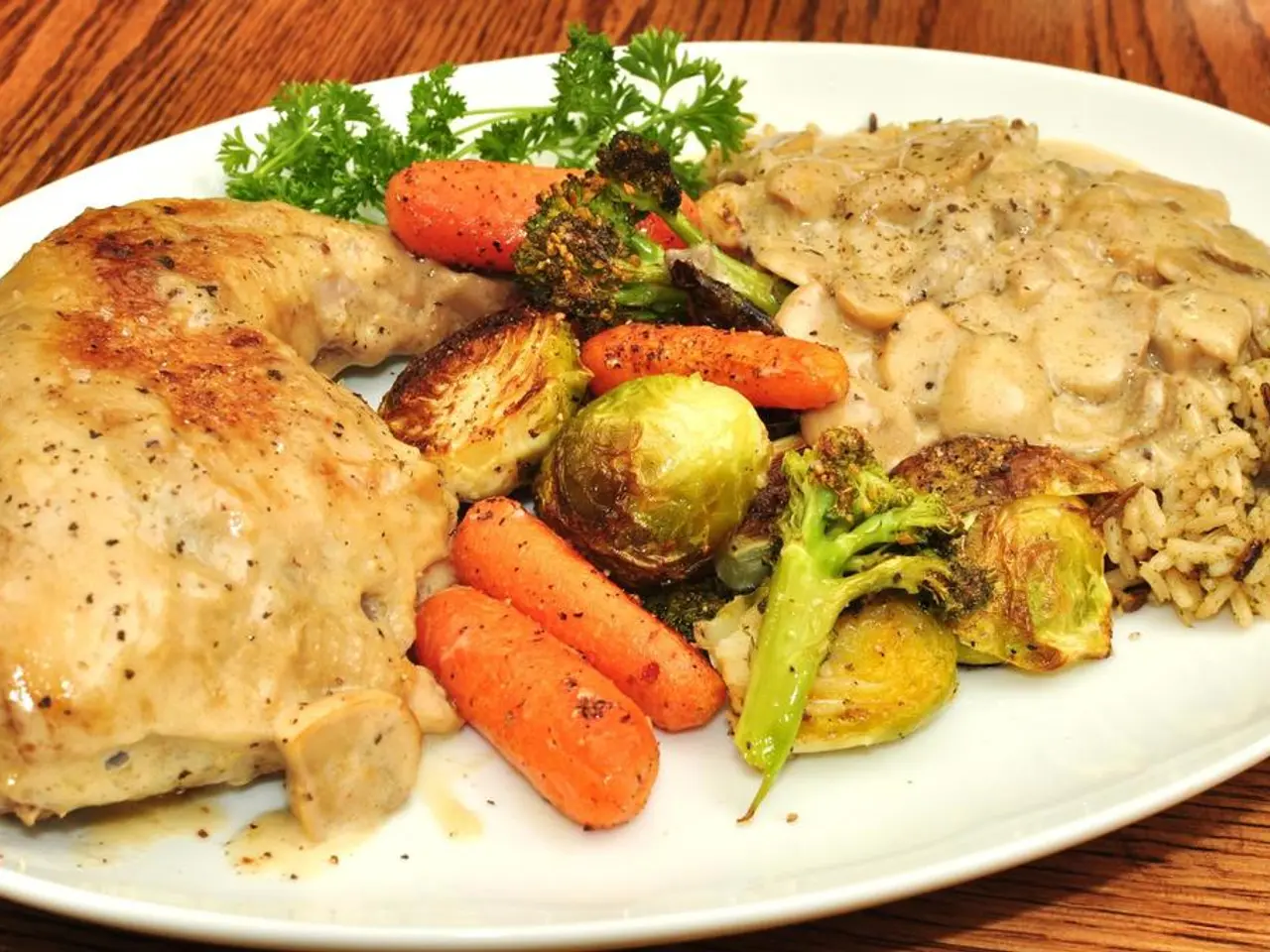
Low-Cholesterol Foods to Incorporate into Your Diet: Restrictions to Consider and Additional Tips
Improving Cholesterol Levels through Diet: A Guide to Heart-Healthy Eating
A balanced diet rich in certain foods can help lower cholesterol levels, reducing the risk of heart disease and strokes. Here's a rundown of the top foods to include and those to avoid or limit in your diet.
Foods to Eat
- Oats and Barley: These grains are packed with soluble fiber (beta-glucan), which binds cholesterol in the gut and removes it from the body 1, 2.
- Lentils and Beans: Rich in soluble fiber and plant protein, these legumes reduce cholesterol absorption and help stabilize blood sugar [1].
- Fatty Fish: Fish like salmon, mackerel, and sardines are high in omega-3 fatty acids, which lower triglycerides and may raise HDL ("good") cholesterol [1], [2].
- Nuts: Almonds and walnuts, for example, provide healthy unsaturated fats, fiber, and plant sterols that lower LDL ("bad") cholesterol [1], [2].
- Avocado: This fruit contains monounsaturated fats and fiber that lower LDL cholesterol without reducing HDL [1].
- Fruits and Vegetables: These are rich in fiber and nutrients, supporting overall heart health 3, 4.
- Whole Grains: Besides oats and barley, other whole grains contribute beneficial fiber and nutrients [3], [4].
Foods to Avoid or Limit
- Saturated Fats: Found in processed meats, butter, and tropical oils (coconut, palm oil), these fats raise LDL cholesterol by increasing liver production of LDL and reducing LDL clearance [3], [4].
- Trans Fats: Artificial trans fats raise bad cholesterol and lower good cholesterol, and have been largely banned, but small amounts exist naturally in some animal products [4].
- Highly Processed and Ultra-Processed Foods: These often contain added sugars, unhealthy fats, and salt with low nutritional benefit, contributing to poor cholesterol levels and heart health [4].
Additional Foods
- Soybeans and soy products: Can lower LDL cholesterol levels by around 3-4% when included in a heart-healthy diet 5.
- Dark chocolate: Contains flavonoids, which have antioxidant and anti-inflammatory properties that may benefit heart health 6.
- Bananas: Rich in soluble fiber and potassium, they can have a positive effect on increasing digestive transit time, lowering cholesterol, and reducing blood pressure, when eaten as part of a healthy diet 7.
- Green tea: Consumption significantly improves cholesterol levels, reducing both total and LDL cholesterol levels without lowering HDL cholesterol levels 8.
- Extra virgin olive oil: A staple in the heart-healthy Mediterranean diet, it might help reduce LDL levels due to its monounsaturated fats 9.
- Okra: Contains a gel called mucilage that can help lower cholesterol by binding to it during digestion, allowing cholesterol to leave the body through stool 10.
Recommendations
The American Heart Association recommends reducing the amount of saturated and trans fats in the diet to lower cholesterol and heart disease risk 11. Lifestyle and diet changes can reduce cholesterol levels quickly, including limiting saturated fats from the diet, increasing physical activity levels, reducing alcohol intake, quitting smoking (if necessary), and eating a diet rich in high fiber, whole fruits and vegetables, whole grains, and healthy fats.
In summary, enhancing intake of soluble fiber, omega-3 fatty acids, and healthy unsaturated fats while reducing saturated and trans fat intake forms the core of dietary strategies to improve cholesterol and reduce cardiovascular risk [1], [3], [4].
- A balanced diet rich in certain foods can be beneficial for people with diabetes in managing their cholesterol levels and reducing the risk of heart disease and strokes.
- Oats and barley, being high in soluble fiber, can help lower cholesterol levels in individuals with established medical conditions like diabetes.
- Lentils and beans, which are rich in soluble fiber and plant protein, can aid in stabilizing blood sugar levels, a crucial aspect for persons with diabetes.
- Incorporating fatty fish into a diet can help lower triglycerides and potentially raise HDL cholesterol, benefits that can be particularly crucial for those at higher risk of cardiovascular diseases, including diabetics.
- Nuts like almonds and walnuts, with their healthy unsaturated fats and fiber, can assist in reducing LDL cholesterol, a key element in those battling obesity and diabetes.
- Avocado, containing monounsaturated fats and fiber, can help in lowering LDL cholesterol without affecting HDL levels, a valuable quality for those managing weightloss and dealing with diabetes.
- For people with macular degeneration, a condition often associated with aging, a healthy diet rich in fruits and vegetables can support overall heart and eye health.
- Whole grains, in addition to oats and barley, can contribute beneficial fiber and nutrients, supporting heart health, in particular for elderly persons who may be struggling with cholesterol levels.
- Aerobic exercises and fitness-and-exercise routines, along with a healthy-diet and a good nutrition plan, can contribute to maintaining cardiovascular health, important for people with diabetes and obesity.
- A healthy-diet packed with high-fiber foods like oats, fruits, and vegetables, can help prevent or delay the onset of nutrition-related medical conditions like diabetes, obesity, and cardiovascular diseases.
- Besides cholesterol, eating a healthy diet also helps maintain healthy levels of triglycerides, a component linked to increased risk of stroke, particularly for people with diabetes and obesity.
- High intake of fiber, healthy fats, and whole fruits and vegetables can help reduce the risk of degenerative diseases like diabetes, obesity, and cardiovascular diseases, contributing overall to a person's health-and-wellness.