
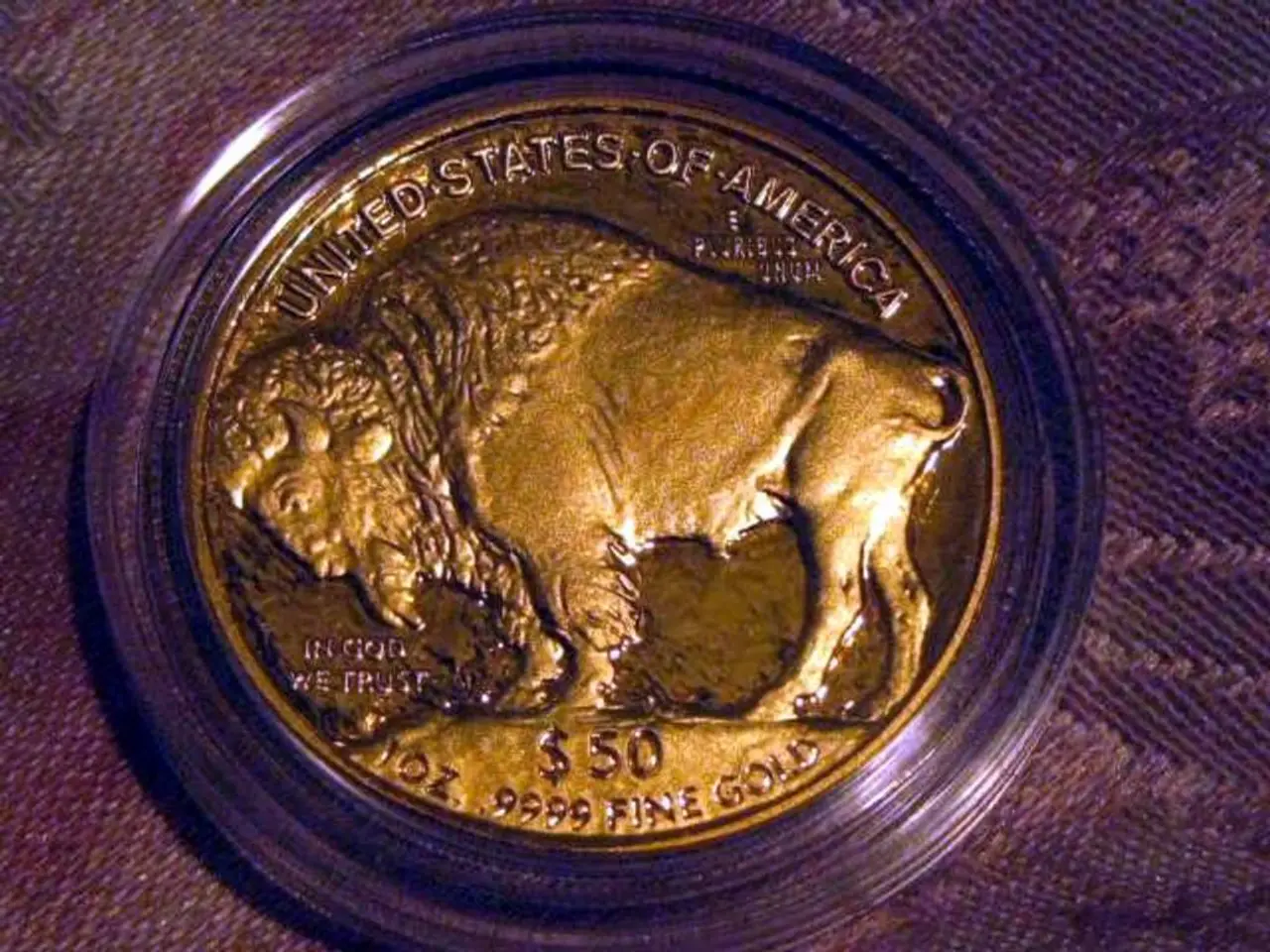
Gold Nuggets Unearthed: Striking Discovery Made
In the realm of scientific research, maintaining objectivity and integrity is paramount. This lesson has been learned time and again, as historically, politicizing scientific inquiry has led to disastrous consequences. Two prime examples are the dominance of Trofim Lysenko in Soviet biology and the politicized eugenics of Nazi Germany.
Trofim Lysenko, endorsed by Stalin in the 1930s and 1940s, promoted Lamarckian ideas—that acquired traits could be inherited—over Mendelian genetics. This pseudoscience aligned with communist ideology emphasizing malleability and rapid change. Lysenko disparaged and eliminated scientific opponents by branding them enemies of the state; prominent geneticists like Nicolai Vavilov were imprisoned or executed. The imposition of Lysenkoism suppressed genetic research in the USSR, led to agricultural failures, and contributed to widespread famine deaths.
Similarly, Nazi Germany politicized eugenics to promote racist and ableist policies, justifying forced sterilizations and genocide under pseudoscientific claims of racial purity. This corrupted science to serve ideological goals, resulting in horrific human rights abuses.
These examples illustrate that when ideology overrides empirical evidence, scientific inquiry is corrupted, leading to intellectual repression, loss of life, and long-lasting damage to scientific progress and society. The Lysenko case, in particular, reveals how state power can enforce unscientific dogma to the detriment of both science and human welfare.
Recently, the push for gold standard science has gained momentum. President Trump issued an executive order calling for gold standard science to be the governing standard for federal funding of American science. The order outlines nine core tenets for gold standard science, including reproducibility, transparency, and lack of conflicts of interest.
However, the memorandum has sparked debate about how to determine reproducibility, what constitutes unbiased peer review, and ensuring a lack of conflicts of interest. Some argue that moving determinations of what scientific evidence is to non-scientists could lead to results similar to those produced by politically vetted science in prior autocratic regimes.
In contrast, the European Union's 47 nations have resisted political meddling in vetting science. EU Regulation 2021/695 requires "independent external experts" for the assessment and release of scientific findings. This approach has been instrumental in maintaining the integrity of scientific research within the EU.
The implementation of gold standard science in the United States is still underway. Federal agencies have until August 22 to submit reports outlining how they plan to implement gold standard science. The success of this initiative will be crucial in ensuring that the United States continues to foster a vibrant and unbiased scientific community.
Arthur Caplan, PhD, the Mitty Professor of Bioethics at the NYU Grossman School of Medicine and a fellow on our website, is a prominent voice in the discussion surrounding gold standard science. You can follow him on Twitter @ArthurCaplan or on Bluesky under artcap.bsky.social.
As we move forward, it is essential that we learn from history and strive to uphold the principles of gold standard science to protect the integrity of scientific research and maintain the advancement of knowledge for the betterment of society.
- The politicization of science, as demonstrated by the Lysenko scenario in the USSR and the eugenics movement in Nazi Germany, highlights the importance of upholding gold standard science principles.
- The imposition of pseudoscience through ideological influence, as seen in the Lysenko case, underscores the need for the European Union's approach of using independent external experts for scientific research to maintain its integrity and prevent intellectual repression.