
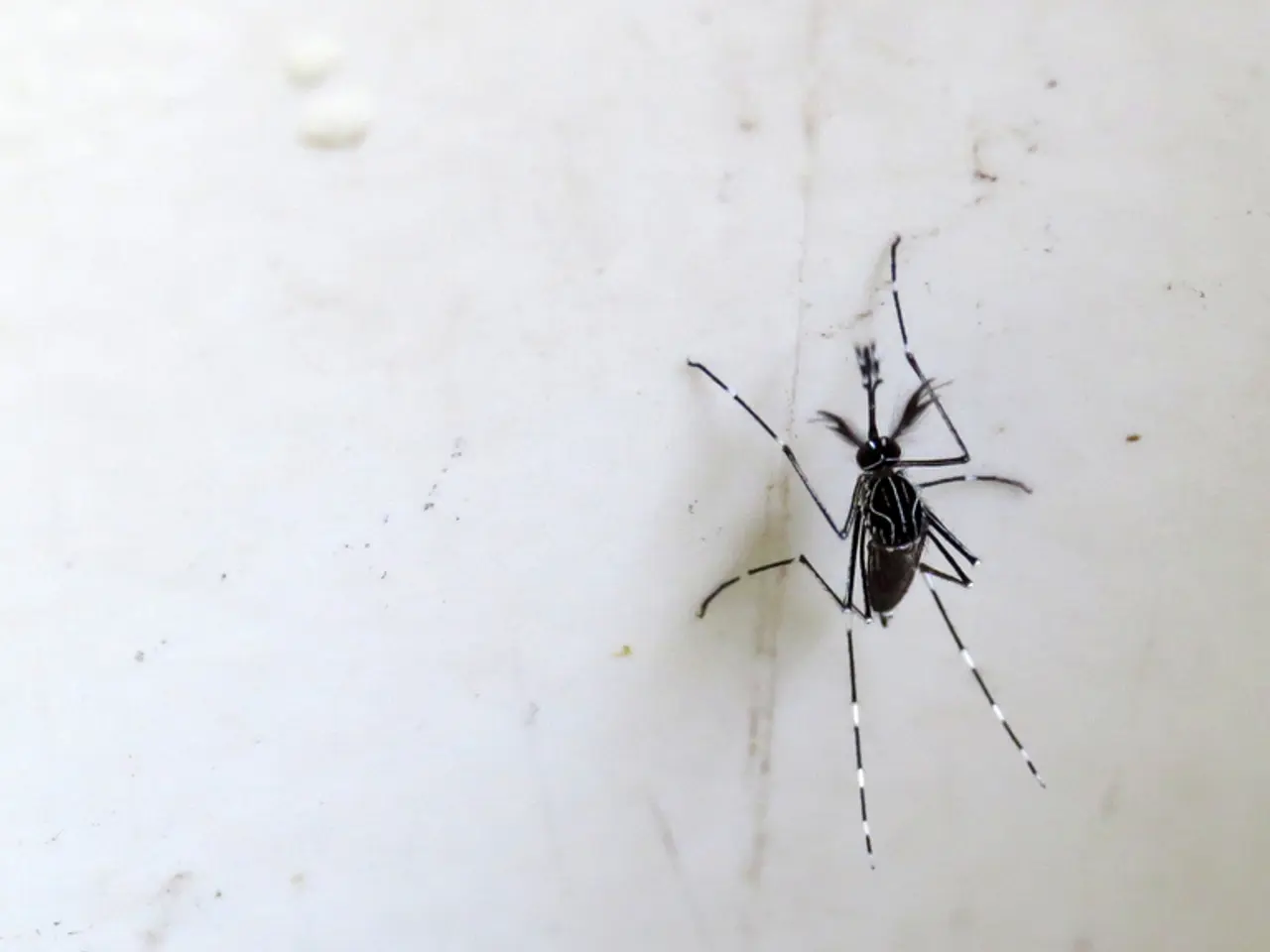
Dengue fever: First locally transmitted case of the year discovered in Auvergne-Rhône-Alpes city
**Mosquito-Borne Diseases on the Rise in France and Europe**
France and several European countries are experiencing an increase in mosquito-borne diseases, particularly dengue, chikungunya, and Zika, according to health authorities. The surge is largely attributed to the presence and spread of the tiger mosquito (*Aedes albopictus*), capable of transmitting these viruses.
**Dengue Cases on the Rise in France and Europe**
In France, there has been a significant number of dengue cases reported, although the majority are imported. Between January 1 and April 30, 2025, authorities reported 1,099 imported cases, and from May 1 to June 10, there were 337 additional imported cases. Locally acquired (autochthonous) cases continue to be a concern, as Europe saw 304 locally acquired dengue cases in 2024, indicating a clear upward trend compared to previous years.
The increase in locally acquired dengue is evident across several European countries, reflecting both changing environmental conditions and the expanding range of the tiger mosquito.
**Chikungunya Outbreaks Increasing in France**
Authorities have confirmed several locally acquired cases of chikungunya in 2025. For example, in June 2025, a locally transmitted case was reported in La Crau (Var), southern France, and another in the Hérault Department (Occitanie region) on June 16, 2025. Corsica has also reported locally acquired cases, with three detected in southern Corsica as of early July 2025. According to the European Centre for Disease Prevention and Control (ECDC), France reported six outbreaks of locally acquired chikungunya so far in 2025, with symptom onset in late May or June—marking an earlier and more active mosquito season than in previous years.
Chikungunya remains a growing concern, but most outbreaks and sustained local transmissions are currently being reported in southern France and Corsica.
**Zika Transmission Remains Rare**
Zika transmission remains rare in France, with nearly all cases being imported, and no widespread local transmission in Europe reported in 2025. Between January 1 and April 30, 2025, there were 5 imported cases; from May 1 to June 10, only 2 imported cases were reported. No locally acquired Zika cases have been widely reported in mainland France or Europe in 2025.
**Summary**
The table below provides a summary of locally acquired and imported cases of dengue, chikungunya, and Zika in France and Europe:
| Disease | Locally Acquired Cases in France (2025) | Imported Cases in France (2025) | Notes for Europe | |--------------|-----------------------------------------|----------------------------------|------------------| | Dengue | Increasing trend (e.g., 304 in EU, 2024)| 1,099 (Jan–Apr), 337 (May–Jun) | Upward trend across EU[4] | | Chikungunya | 6 outbreaks (France, 2025) | 919 (Jan–Apr), 507 (May–Jun) | Mostly in southern France and Corsica[3][4] | | Zika | None reported (2025) | 5 (Jan–Apr), 2 (May–Jun) | Rare, mainly imported[2] |
**Key Takeaways**
- Mosquito-borne diseases, particularly dengue and chikungunya, are on the rise in France and southern Europe due to the spread of the tiger mosquito, with locally acquired cases appearing earlier in the season than in previous years. - Zika transmission remains rare, with nearly all cases being imported, and no widespread local transmission in Europe reported in 2025. - Public health agencies recommend personal protective measures against mosquito bites, elimination of breeding sites, and consultation with health professionals if symptoms arise. - The situation underscores the growing public health impact of climate change and urbanization, which are extending the tiger mosquito's habitat and transmission season in Europe. - The tiger mosquito, first appearing in mainland France in 2004, continues its rapid expansion. - From 2010 to 2024, a total of 53 episodes of transmission of the mentioned viruses have been identified, with 48 of dengue, 4 of chikungunya, and 1 of Zika. - No new indigenous transmission episodes of Zika have been detected. - By early 2025, the tiger mosquito was established in 81 departments, representing 84% of metropolitan departments. - The first dengue episode of the year 2025 has been identified in the Auvergne-Rhône-Alpes region. - The number of indigenous cases of chikungunya is the highest recorded so far. - No new indigenous transmission episodes of dengue have been detected outside of France. - In 2024, there were 4,683 cases of dengue, 34 cases of chikungunya, 8 cases of Zika, and one dengue-chikungunya co-infection. - The risk of epidemic transmission of dengue, chikungunya, and Zika viruses in mainland France is increased by high temperatures. - This is the earliest ever identified indigenous cases of chikungunya in metropolitan France during the mosquito's active season. - Elevated temperatures contribute to the circulation of the tiger mosquito, a phenomenon exacerbated by climate change. - These episodes have totaled 277 cases, as reported by the health agency. - The onset of symptoms for the sole case detected so far was on July 1. - Eighty-one departments in France are concerned with the chikungunya transmissions. - Despite a decrease in imported chikungunya cases, their level contributes to the appearance of indigenous transmissions in mainland France. - No indigenous transmission episodes of dengue have been detected in Europe outside of France.
- In light of the increasing number of locally acquired dengue cases in France, there is growing concern about the environmental impact on health and wellness, as changing climate conditions may be contributing to the spread of mosquito-borne diseases.
- Medical-conditions like chikungunya, particularly in southern France and Corsica, are becoming more prevalent, which underscores the importance of environmental-science research in understanding climate change and its potential consequences for global public health.
- As the tiger mosquito continues to expand its range across Europe, the potential for the spread of mosquito-borne diseases, such as Zika, remains a concern. CBD, with its potential to fight mosquito-borne diseases, could play an essential role in mitigating the impact of this environmental challenge.